TL;DR: Category 3 water damage, also called black water, is the most hazardous classification under the IICRC S500 standard. It includes sewage backups, floodwater that has contacted the ground, and any water that has sat long enough to become grossly contaminated. It cannot be safely cleaned with household products. All affected porous materials must be removed, the structure must be disinfected with EPA-registered antimicrobials, and the area must be dried to documented moisture targets before any rebuilding begins.
If sewage backed up into your bathroom, floodwater entered your home through a door or window, or you noticed your water damage smells foul and has a dark color, you are likely dealing with Category 3 water. This is not a situation where bleach and a shop vac will get you to safe. The IICRC S500 Standard for Professional Water Damage Restoration classifies water into three categories based on contamination level, and Category 3 sits at the top of that scale for a reason. Here is what that means for your home and your health.
What Is Category 3 Water Damage?
Category 3 water, commonly called black water, is water that is grossly contaminated and poses a serious health risk to anyone who contacts it. Under the IICRC S500 standard, Cat 3 includes sewage, toilet overflow with feces present, floodwater from rivers or storm drains, seawater, and any water that has been standing long enough for bacteria and mold to multiply to dangerous levels. The name “black water” refers to the contamination level, not necessarily the color of the water itself.
The three IICRC categories work like this:
- Category 1 (Clean Water): Water from a supply line, a clean sink overflow, or a broken appliance inlet. No significant contamination at the source. Still requires prompt drying to prevent it from degrading.
- Category 2 (Gray Water): Water with some contamination that can cause illness if ingested or if a person has prolonged contact. Dishwasher overflow, washing machine discharge, and aquarium leaks fall here.
- Category 3 (Black Water): Grossly contaminated water containing pathogens, sewage solids, heavy metals, or other toxic materials. Any contact creates a health risk.
One important detail: Category 1 or Category 2 water that sits untreated will degrade. Clean water from a burst pipe that soaks into drywall and sits for 48 to 72 hours in a warm environment can escalate to Category 2 or Category 3 as bacteria multiply. This is why the timeline matters as much as the source.
Is Category 3 Water Damage Dangerous?
Yes. Category 3 water contains bacteria such as E. coli and Salmonella, viruses, parasites, and in sewage situations, fecal matter with active pathogens. The CDC notes that floodwater can carry sewage, agricultural runoff, and chemical contaminants, all of which can cause serious illness through skin contact, inhalation of aerosolized droplets, or accidental ingestion.
Beyond the biological hazards, Category 3 losses create secondary risks:
- Mold growth can begin within 24 to 48 hours in wet, contaminated materials. Sewage-soaked drywall and subfloor are ideal mold substrates.
- Structural damage accelerates when contaminated water saturates wood framing, subfloor sheathing, and insulation.
- Odor penetration into porous materials is deep and persistent. Surfaces that look dry may still off-gas contaminated particles.
Children, elderly adults, pregnant women, and anyone with a compromised immune system face the highest risk, but Category 3 water is dangerous for healthy adults as well. This is not a risk worth taking to save on remediation costs.
How Do Contractors Handle Category 3 Water Damage?
Professional Category 3 remediation follows a specific protocol that goes well beyond standard water damage drying. Certified technicians treat the contamination first, then dry the structure.
Here is the standard process:
- Containment. The affected area is isolated with poly sheeting and negative air pressure to prevent contaminated particles from spreading to clean areas of the home.
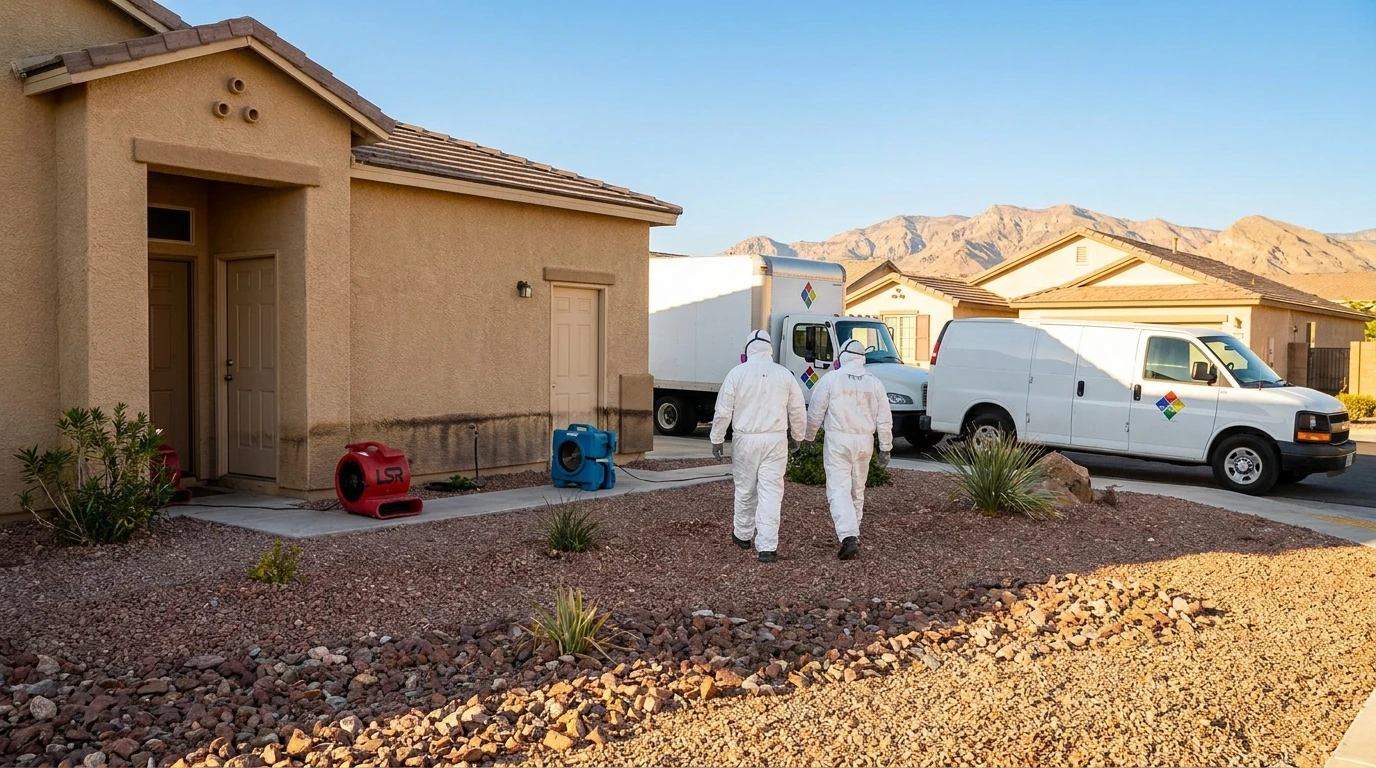
- PPE and safety setup. Technicians working in Category 3 environments wear full Tyvek coveralls, N95 or higher respirators, face shields, and double-gloved nitrile gloves. This is not optional.
- Water extraction. Standing water is removed with truck-mounted or portable extractors. Sewage solids are removed and disposed of as regulated waste.
- Removal of porous materials. Drywall, insulation, carpet, carpet pad, and contaminated subfloor sections that cannot be adequately disinfected are removed and bagged for disposal. The IICRC S500 is explicit: porous materials that have contacted Category 3 water cannot be reliably restored in place.
- Disinfection. All remaining structural surfaces are treated with EPA-registered antimicrobial agents at appropriate dwell times. This is not a one-spray pass. Technicians document the products used and the application method.
- Structural drying. Air movers and LGR (low-grain refrigerant) dehumidifiers are placed to dry the exposed framing and structural materials to IICRC target moisture levels. Moisture readings are logged daily.
- Clearance verification. Before any reconstruction begins, moisture readings must confirm the structure is within acceptable ranges. In some cases, post-remediation testing is performed.
For a broader look at what the full water damage restoration process involves, the post on water damage restoration cost in NV covers what each phase typically adds to the total scope.
Will Insurance Cover Category 3 Water Damage?
It depends on the source of the loss, not the category itself. Most standard homeowners policies cover sudden and accidental water damage, but coverage for sewage backup and flooding is often excluded or requires a separate endorsement.
Here is how the common scenarios break down:
- Sewage backup from a city line: Usually NOT covered under a standard homeowners policy. A sewer backup endorsement (sometimes called water backup coverage) is a separate add-on that many homeowners skip until they need it.
- Internal sewage backup from a clog in your own drain: Coverage varies by policy and by whether the backup was sudden or the result of a known, unaddressed issue.
- Floodwater from a storm or overflowing waterway: Not covered by standard homeowners insurance. Flood insurance through the National Flood Insurance Program (NFIP) or a private flood policy is required.
- Burst pipe that escalated to Cat 3 due to delay: The underlying burst pipe event may be covered, but the insurer may dispute the scope if the delay in reporting contributed to the escalation.
The documentation a restoration company provides matters here. A written scope of work that references IICRC S500 category classifications, moisture logs, and material removal justifications gives your adjuster the evidence they need to process the claim. For more on how insurance handles water events, see the post on does homeowners insurance cover water damage.
If you are filing a claim, notify your insurer before demolition begins when possible. Most policies require the insurer to inspect or send an adjuster before materials are removed.
What Should You Do Right Now If You Have Category 3 Water?
If you are standing in sewage-contaminated water or your home flooded from an outside source, take these steps immediately:
- Get everyone out of the affected area. Do not let children or pets enter.
- Do not run HVAC systems. Forced air can spread contaminated particles through ductwork.
- Document with photos and video before touching anything, if it is safe to do so.
- Call your insurance company to report the loss and ask about your sewer backup coverage.
- Call a certified restoration company that holds IICRC WRT (Water Damage Restoration Technician) and ASD (Applied Structural Drying) certifications. These credentials mean the technicians have been trained specifically in water damage classification and drying science.
Do not attempt to clean Category 3 water yourself. The risk is not worth it, and improper cleanup can void your insurance coverage if the insurer determines the loss was worsened by unauthorized remediation.
Life Savers Restoration LLC handles sewage cleanup, water damage restoration, and biohazard cleanup across the Las Vegas Valley, 24 hours a day. Their crews hold IICRC WRT and ASD certifications and carry license 0091001. If you are dealing with a Category 3 loss, call (702) 845-1325 to schedule an emergency assessment.
About Life Savers Restoration LLC
Life Savers Restoration LLC is an IICRC Certified Firm serving Henderson, Las Vegas, and surrounding Nevada communities since 2019 (license 0091001). Their certified technicians hold IICRC credentials in water damage restoration (WRT), structural drying (ASD), mold remediation (AMRT), and fire and smoke restoration (FSRT). The company handles water damage restoration, sewage cleanup, biohazard cleanup, mold remediation, fire damage restoration, odor removal, storm damage restoration, and contents restoration across the greater Las Vegas Valley, with 24/7 emergency availability.