24/7 Emergency Sewage Cleanup and Sanitization in Henderson
24/7 emergency sewage cleanup and sanitization in Henderson and surrounding areas. IICRC-certified, insurance billing accepted. Call (702) 845-1325.
Sewage backup in Henderson? We answer 24/7. Call now and our crew heads out to contain the contamination and start the cleanup.
When a sewer line backs up or a septic system overflows, the material that surfaces isn’t just water, it’s Category 3 “black water” carrying fecal coliform bacteria, hepatitis-risk pathogens, and aerosolized contaminants that begin colonizing porous surfaces within hours. The smell hits first, but the real damage is invisible: raw sewage saturates subfloor sheathing, wicks into drywall cavities, and soaks into carpet padding long before the surface looks wet. This is not a cleanup you can manage with a mop and bleach.
What sewage cleanup and sanitization actually involves
Sewage losses are classified as Category 3 water intrusion under the IICRC S500 standard, the highest contamination tier. That classification changes everything about how the job is handled. Materials that can be dried and saved after a clean-water pipe burst often must be removed entirely after sewage contact: carpet, carpet pad, the bottom courses of drywall, insulation, and sometimes hardwood subfloor all become regulated waste once they’ve been saturated with black water.
The work involves industrial-grade extraction equipment capable of pulling standing sewage and solids from the floor, followed by HEPA-filtered negative air machines that run continuously to prevent aerosolized pathogens from migrating to unaffected rooms. After physical removal of contaminated materials, the affected cavity, concrete slab, floor joists, wall studs, is treated with EPA-registered hospital-grade disinfectants, not consumer-grade products. Dwell time matters: the disinfectant has to stay wet on the surface long enough to kill the pathogen load, which is a step that gets skipped when the job is rushed.
Timeline from first call to clearance typically runs two to five days depending on how far the sewage traveled and how many structural assemblies were affected. A backup confined to a single bathroom is a different scope than an overflow that reached a finished basement.
Our process
-
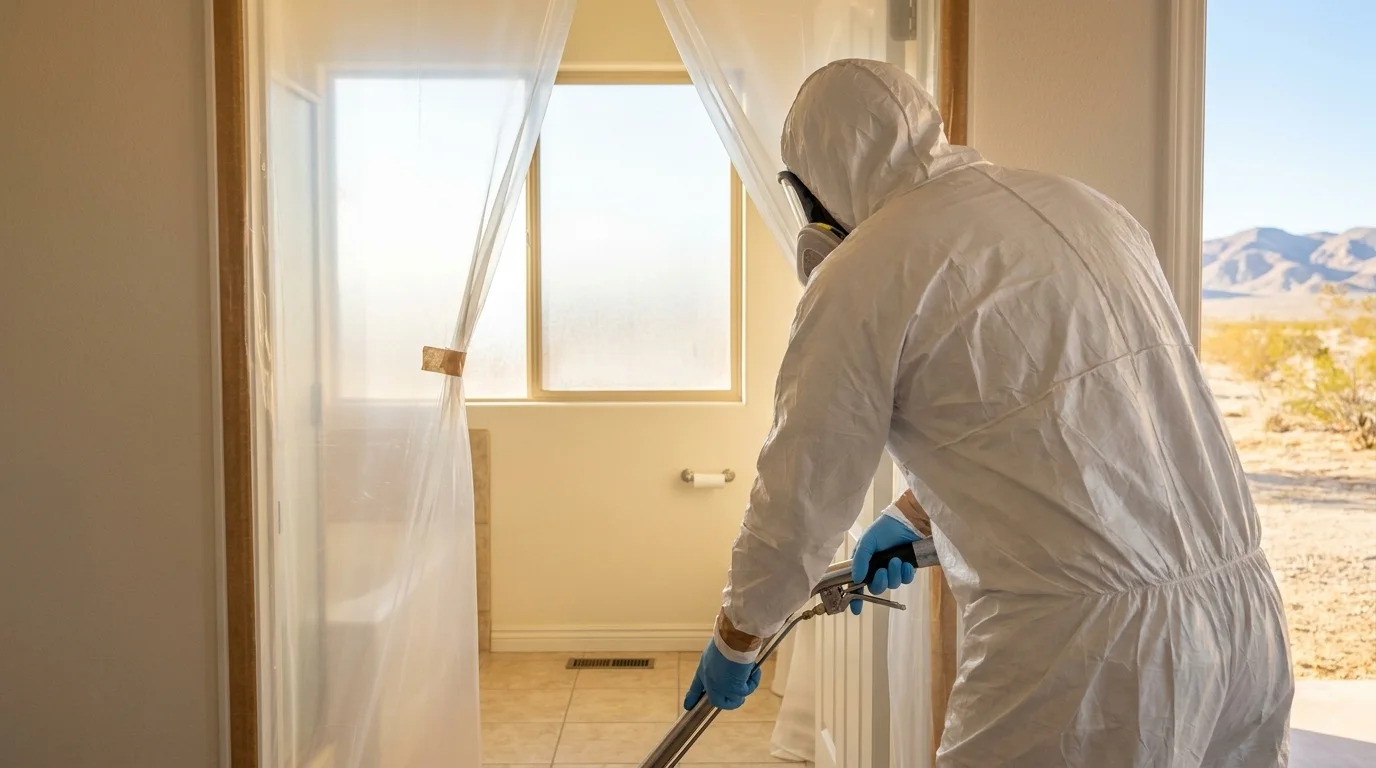
Containment and PPE staging. Before extraction begins, the affected area is isolated with physical barriers and negative air pressure to prevent cross-contamination. Technicians work in full PPE, respirators rated for biological hazards, disposable suits, and chemical-resistant gloves, throughout every phase of the job.
-
Sewage extraction and solids removal. Truck-mounted and portable extraction units remove standing liquid. Solid waste is bagged and staged for disposal as regulated biohazardous material. This step includes clearing floor drains and confirming the source backup has been resolved by a licensed plumber before restoration work continues.
-
Contaminated material removal and waste manifest. Saturated flooring, drywall, insulation, and cabinetry within the affected zone are removed, bagged, and documented. A written waste manifest tracks regulated material from your property to licensed disposal, documentation your insurance adjuster will ask for.
-
Disinfection and antimicrobial treatment. Exposed structural surfaces, concrete, framing, subfloor, are treated with EPA-registered disinfectants applied at manufacturer-specified dwell times. A second application of antimicrobial treatment follows to inhibit any residual microbial growth during the drying phase.
-
Structural drying and clearance verification. Remaining structural assemblies are dried using commercial desiccant or refrigerant dehumidifiers and air movers. Moisture readings are logged daily until all affected materials reach dry standard. Odor, the persistent sulfur-and-ammonia signature of sewage, is addressed with thermal fogging or hydroxyl generation after the source material is gone, not before.
What separates a good sewage response from a bad one
The most common mistake in sewage cleanup is treating it like a water damage job. Technicians who skip full Category 3 protocol, using standard wet-vacs, applying bleach without proper dwell time, leaving porous materials in place, create a liability for the homeowner. Bacteria and mold don’t care that the surface looks clean.
A second failure point is incomplete source confirmation. Restoration work should not begin until a licensed plumber has confirmed the sewer line or septic system is clear. Starting drying while the backup source is still active is a waste of time and money.
Insurance adjusters reviewing sewage claims look for a written scope of work that identifies affected materials by category, photographs documenting pre- and post-removal conditions, moisture logs showing drying progression, and a waste manifest for removed materials. Adjusters also look for documentation that the disinfection protocol met the IICRC S500 Category 3 standard, gaps in that paperwork can delay or reduce claim payment.
Life Savers Restoration LLC is an IICRC Certified Firm with technicians holding IICRC Water Restoration Technician (WRT) and Applied Structural Drying (ASD) certifications, and the team is OSHA trained and EPA Lead-Safe Certified, relevant when sewage affects older homes with lead-based paint in wall assemblies. License #0091001.
What does sewage cleanup and sanitization cost?
Typical costs run from under two thousand dollars for a minor backup with no structural material removal to well over ten thousand for losses that reach finished living space or require subfloor replacement. Most homeowners pay somewhere in the middle. Every loss is different, and Life Savers Restoration LLC provides a written scope of work before any work begins so there are no surprises.
| Scenario | Typical industry range |
|---|---|
| Single bathroom backup, hard surface floors only | $1,500 – $3,500 |
| Backup with carpet and pad removal, one room | $2,500 – $5,500 |
| Backup reaching finished basement, drywall removal | $5,000 – $12,000 |
| Septic overflow, multiple rooms, subfloor affected | $8,000 – $20,000+ |
| Crawl space sewage contamination | $4,000 – $10,000 |
Homeowners insurance typically covers sudden and accidental sewer line backups when the policy includes a sewer backup rider, standard HO-3 policies often exclude sewage damage without that endorsement, so it’s worth confirming your coverage before assuming the claim is fully covered.
Seasonal and regional considerations
Henderson and the broader Las Vegas Valley sit in a desert basin, but sewage backups here follow patterns that surprise homeowners who moved from wetter climates. The valley’s clay-heavy soil expands significantly during the infrequent but intense monsoon rain events that hit southern Nevada between July and September. That soil movement puts lateral pressure on older clay or cast-iron sewer laterals, accelerating joint separation and root intrusion, the two most common causes of residential sewer line backup in established Henderson neighborhoods.
Homes built before the mid-1980s in older Henderson subdivisions are more likely to have original clay tile sewer laterals that have never been replaced. If your home is in that era and you’ve had a backup, a camera inspection of the lateral is worth scheduling alongside the cleanup, the backup is often a symptom, not the root cause.
Hard water mineral buildup, common throughout Clark County due to the region’s water chemistry, also contributes to slower drain flow over time, which compounds the risk of backup during high-use periods.
Service area
Life Savers Restoration LLC is based in Henderson and responds to sewage backup and sanitization calls throughout Henderson, Las Vegas, North Las Vegas, Boulder City, Enterprise, Summerlin, and surrounding Clark County communities. City-specific service pages for this service link back here for full process and technical detail.
If raw sewage has surfaced in your home, the clock on pathogen spread and material damage is already running. Call Life Savers Restoration LLC at (702) 845-1325, available 24/7, to begin sewage extraction and sanitization.
Services We Handle
- Basement Sewage Cleanup
- Category 3 Water Cleanup
- Sewage Backup Cleanup
- Sewage Cleanup & Remediation
- Sewage Damage Cleanup
- Sewer Cleaning & Repair
- Sewer Line Repair
- Water Damage Sewage Cleanup
Frequently Asked Questions
Does homeowners insurance cover sewage backup cleanup?
Why can't I just clean up sewage backup myself with bleach and a wet-vac?
How do I know if sewage has reached inside my walls or under my flooring?
Does the sewer line need to be fixed before you can start the cleanup?
What causes the sewage smell to linger even after the visible material is removed?
Looking for the best sewage cleanup and sanitization company in Henderson?
Life Savers Restoration LLC provides licensed and insured sewage cleanup and sanitization in Henderson, NV and the surrounding area, and has served local property owners since 2019. Customers rate us 4.8 out of 5 stars across 246 Google reviews. We answer calls 24/7 — call (702) 845-1325 for immediate help.
Need Sewage Cleanup and Sanitization now?
We respond 24/7 across Henderson and surrounding NV cities.
Related Coverage
- Our Restoration Services
- Contact Life Savers Restoration LLC
- 24/7 Emergency Sewage Cleanup and Sanitization in Boulder City
- 24/7 Emergency Sewage Cleanup and Sanitization in Enterprise
- 24/7 Emergency Sewage Cleanup and Sanitization in Las Vegas
- 24/7 Emergency Sewage Cleanup and Sanitization in North Las Vegas
- 24/7 Emergency Sewage Cleanup and Sanitization in Paradise
- 24/7 Emergency Sewage Cleanup and Sanitization in Spring Valley
- 24/7 Emergency Sewage Cleanup and Sanitization in Sunrise Manor
- 24/7 Emergency Sewage Cleanup and Sanitization in Whitney