
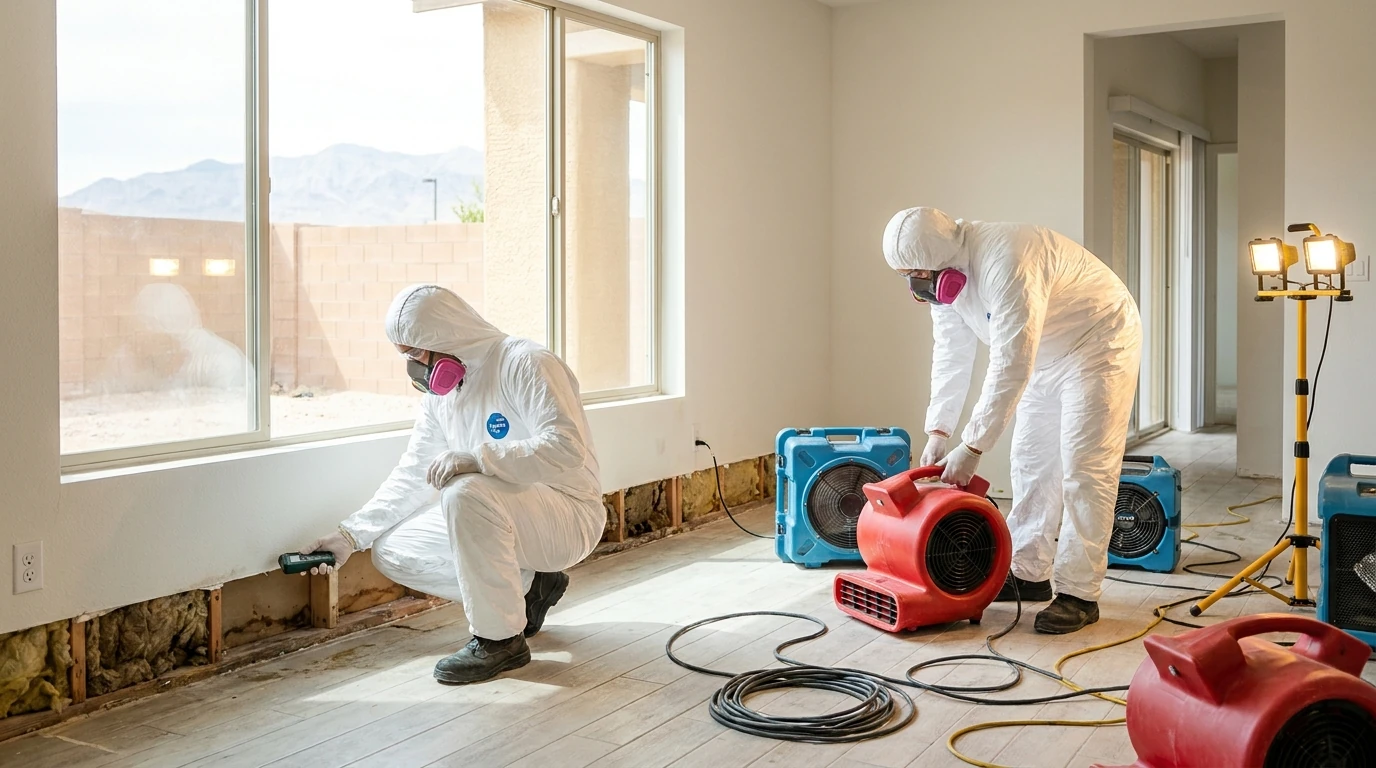
When a water damage restoration crew handles a job well, homeowners usually notice two things: how quickly the team gets organized, and how much equipment ends up running in their living room. One recent review left for Life Savers Restoration LLC captures both of those things, plus a detail that says a lot about how an experienced customer starts thinking like a technician by the end of the job.
“Excellent and professional technicians, whom came in assessed the damages and got to work in a very well planned timeline. Although the fans are very noisy, we would have to watch out for any kind of water flow if there’s any water you used with tubes.”
- Gena, verified Google review
That short review touches on three things that matter more than most homeowners realize: the assessment, the drying plan, and the equipment noise that comes with doing the job right. Here’s what’s actually happening behind each one.
What “Assessed the Damages” Actually Involves
A proper water damage assessment starts before a single fan gets plugged in. Technicians walk the affected area with a moisture meter and often a thermal imaging camera, checking not just the visibly wet surfaces but the drywall, subfloor, and framing behind them. Water travels along the path of least resistance, so damage almost always extends further than what’s visible at first glance.
During this walk-through, the crew also classifies the water. Clean water from a supply line is treated differently than water that has picked up contaminants from flooring or groundwater, which is why the IICRC maintains category and class definitions that restoration firms use to scope the job correctly. That classification drives every decision that follows, including what materials can be dried in place and what has to come out.
This is also the point where the crew documents everything with photos and moisture readings. That record matters later if a homeowner is filing an insurance claim, since adjusters want to see the extent of the damage at the start, not just the finished result.
Why a “Well Planned Timeline” Matters on a Drying Job
A planned timeline means the crew isn’t guessing at equipment placement or coming back to check on things at random. Drying jobs follow a schedule built around daily moisture readings, and the plan adjusts based on what those readings show.
Most structural drying takes three to five days, though that range depends on how much material absorbed water, the humidity in the space, and how many air movers and dehumidifiers the job actually needs. A technician who plans the timeline up front is also planning where equipment goes, which outlets can handle the load, and when it’s safe to start reinstalling flooring or drywall. Rushing that sequence is one of the most common reasons drying jobs fail and mold shows up weeks later. Our burst pipe emergency checklist walks through the early hours of a similar situation if you’re dealing with an active leak right now.
The Truth About Noisy Fans (and Why They’re Necessary)
Air movers are loud because moving a lot of air quickly is the entire point. A single air mover can push several hundred cubic feet of air per minute across a wet surface, which is what speeds evaporation and keeps the drying timeline on schedule. Turning them off, even overnight, slows the process and can extend the number of days equipment needs to stay in the home.
A drying setup typically pairs air movers with a dehumidifier that pulls the moisture those fans release out of the air, rather than letting it resettle on nearby surfaces. The combination is what actually dries a structure, not just one or the other. It’s not comfortable to live around for a few days, but it’s the mechanism that gets a home back to normal faster instead of leaving hidden damp spots behind.
Watching the Water Source: What Gena Flagged
Gena’s comment about watching for water flow through tubes points to something restoration techs pay close attention to as well: the supply lines feeding washing machines, ice makers, and dishwashers. Those braided or plastic supply hoses are a common source of slow leaks and sudden failures, and they’re often tucked behind an appliance where nobody checks them until there’s already standing water.
Part of a thorough water damage job includes inspecting those connections, not just drying the damage they already caused. A good technician will point out a supply line that’s showing wear, a shutoff valve that’s hard to reach, or a hose that should be replaced before it becomes the next call. That kind of observation doesn’t show up in a formal scope of work, but it’s exactly the kind of detail that keeps a homeowner from dealing with the same problem twice.
If You’re Dealing With a Water Damage Situation Now
If you’re looking at a wet floor, a failed supply line, or a slow leak that’s finally been discovered, the sequence is the same one described above: assessment first, then a documented drying plan, then the equipment that actually does the work. Life Savers Restoration LLC is IICRC certified and available 24/7 across the Las Vegas Valley for exactly this kind of call. You can review what’s typically covered by a homeowners policy in our guide on whether insurance covers water damage, or request a moisture assessment directly through our contact page.
FAQ
How long does a typical water damage drying job take?
Most residential drying jobs run three to five days, though the exact timeline depends on how much material got wet, the category of water involved, and daily moisture readings taken throughout the job.
Why do the air movers and dehumidifiers have to run continuously?
Because evaporation and moisture removal are a continuous process. Turning equipment off, even for a few hours, slows drying and can allow moisture to resettle into materials that were almost dry, extending the total time equipment needs to stay in the home.
What should I do if I notice a worn or leaking supply line on an appliance?
Shut off the water supply valve to that appliance as soon as you notice a leak, and have the hose inspected or replaced before reconnecting. Braided and plastic supply lines have a service life and should be checked periodically, especially on washing machines, ice makers, and dishwashers.
Will homeowners insurance cover water damage from a supply line failure?
Most policies cover sudden and accidental water damage, which typically includes a supply line failure, though coverage details vary by carrier and policy. Documentation from the initial assessment, including photos and moisture readings, is usually what supports the claim.